 Twice yearly dental visits are a crucial part of maintaining your oral health. Just like you wouldn’t skip your yearly physical, dentist appointments shouldn’t be skipped either. With busy schedules it is tough to find the time for appointments, however, many dentists offer a variety of appointment times so you can find one that compliments your schedule. Once you have your appointment, here is a list of things you should do before you go to your appointment from Dr. Christopher Murphy at Southern Maine Orthodontics.
You should see your dentist twice a year for check-ups. It is important that you have the necessary items for your appointment and also make a list of any questions or concerns you may have to make the most of your appointment time. Read below about how best to prepare for your dental visit.
 You have enough to worry about when getting ready to go on a date, don’t let your braces add to your worries! While date night can be a nerve-wracking experience, above all else, it should be fun! Fortunately, your braces don’t have to be a source of worry. With a few simple tips you can flash your beautiful smile at your date as many times as you want to without being worried about leftovers being hidden in your brackets. Read on for some advice from
  There’s a reason toothpastes will market themselves as having properties that will make your teeth whiter, because everyone wants a shiny, white smile. Unfortunately, things we enjoy such as coffee, tea, red wine, and even some sodas can stain your teeth and darken your smile. Thus, a whitening toothpaste is often not enough to keep your teeth shining bright. Luckily, there are some foods that whiten your teeth naturally. To learn more about what foods can naturally whiten your teeth, keep reading for some advice from
  Seeing an orthodontist is a crucial part of maintaining your oral health and hygiene. Orthodontists are different from dentists in several ways. They have actually completed specialized training that allows them to perform certain treatments that a dentist cannot. In short, you need to see
  Your oral health is
 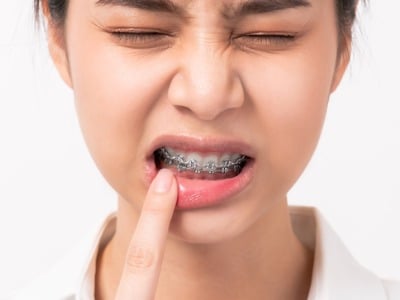 While braces are not painful, your mouth is a very sensitive area. Thus, it is not uncommon to experience a little soreness after your braces have been tightened. However, what everyone feels is a little different! Most only feel a mild, achy pressure that will subside within a day or two. The longer you’re in braces, the quicker your discomfort will go away after each tightening. In the meantime, have no fear! These simple tips can help ease your discomfort from